How to Make Music and Release
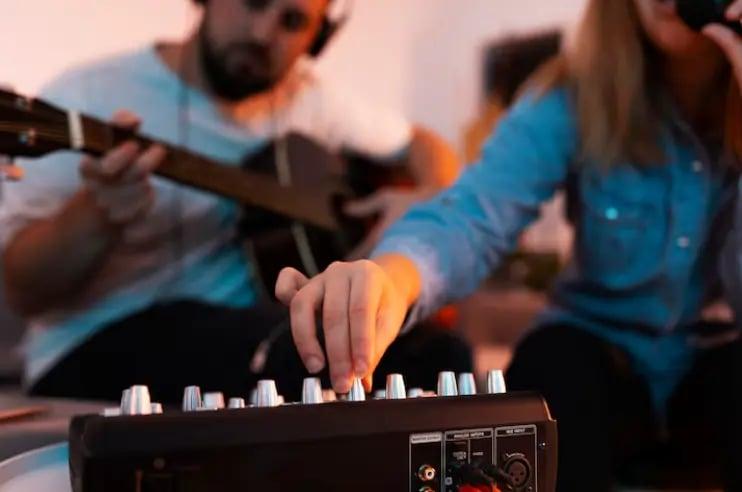
Making music has never been more accessible — or more competitive. In 2026, any person with a laptop, a pair of headphones, and a song idea can produce a studio-quality track from their bedroom and release it to over 150 streaming platforms worldwide in a matter of days. The tools, technology, and distribution networks that once required record label budgets are now available to every independent artist for the price of a coffee a month.
But making music and actually releasing it well are two different challenges. The journey from a spark of inspiration to a fully released, charting track involves dozens of decisions — choosing the right DAW, learning music theory, recording and mixing your sound, mastering for streaming, picking a release date, distributing globally, and promoting smartly across social platforms. Skip the wrong step and your release lands with no momentum. Get the workflow right, and you build a career that compounds with every track.
This complete guide walks you through everything you need to know about how to make music and release it like a professional in 2026 — from setting up your home studio and learning production fundamentals to mastering your final track, distributing globally, and earning streaming royalties. By the end, you will have a clear, actionable roadmap to write, record, produce, release, and grow your music with A3 Tunes supporting you every step of the way.
Understanding What It Takes to Make Music in 2026
Before diving into the tools and techniques, it helps to understand the new reality of making music as an independent artist. The barriers that once defined this industry are gone — replaced by new ones that are far more learnable.
The New Reality of Making Music as an Independent Artist
In 2026, more than 68% of independent creators report using AI-powered tools in their music workflows. Free DAWs like BandLab Studio and Cakewalk offer professional-grade capabilities at zero cost. Cloud-based platforms let you collaborate with producers across the world in real time. And distribution services like A3 Tunes put your finished music on Spotify, Apple Music, JioSaavn, YouTube Music, and 150+ other platforms for as little as ₹1 a day.
The result is a music industry where independent artists now account for over 40% of global recorded music revenue. Bedroom producers in Delhi, Kochi, Guwahati, and Shillong are reaching listeners in Tokyo, São Paulo, and Berlin without ever signing a label deal.
How AI, Cloud DAWs, and Low-Cost Gear Have Transformed Music Creation
The combination of AI and accessible technology has compressed the music creation timeline dramatically. AI tools now generate beats, melodies, and lyrics from text prompts. Stem separation tools isolate vocals, drums, and instruments from any audio file. AI mastering services deliver streaming-ready audio in minutes. Affordable USB microphones produce broadcast-quality recordings. And cloud DAWs let you make music on any device, from anywhere.
A song that once required weeks in a professional studio can now be created in days — sometimes hours — from a bedroom setup costing under ₹20,000.
Why Making Music Is Only Half the Journey — Release Strategy Matters Too
Here is the hard truth: making a great song is necessary but not sufficient. With over 120,000 tracks uploaded to streaming platforms every single day, your music will not be heard unless your release strategy is just as strong as your production.
That means planning your release date in advance, building a pre-save campaign, pitching to playlists, distributing through a reliable global service, promoting on social media, and following up with consistent releases. The artists who treat the release as a project — not an afterthought — are the ones who build sustainable careers.
Setting Up Your Home Studio to Make Music
You do not need a professional studio to make professional music. You do need the right basic setup. Here is what actually matters.
Essential Equipment Every Beginner Needs to Make Music
The bare minimum to start making music today is a computer (laptop or desktop), a Digital Audio Workstation (DAW), a pair of decent headphones, and an internet connection. That is it. Everything else — microphones, MIDI keyboards, audio interfaces, monitors — improves your sound but is not required to begin.
Many new producers waste thousands of rupees on gear they do not need. Your skills matter 100 times more than your equipment in the first year. Start minimal, finish your first 10 tracks, and then upgrade based on what your music actually needs.
Choosing the Right Digital Audio Workstation (DAW) for Your Workflow
The DAW is the software where you actually make music. The best DAWs for beginners in 2026 include:
Free options: BandLab Studio (cloud-based, browser-friendly, completely free), Cakewalk by BandLab (Windows-only, professional-grade), and Tracktion Waveform Free (cross-platform with a minimal interface).
Paid options: Ableton Live (excellent for electronic music and live performance), FL Studio (popular with hip-hop and EDM producers), Logic Pro (Mac-only, deep features for songwriters), and Pro Tools (industry standard for recording studios).
Pick one DAW and stick with it for at least six months. Switching constantly between DAWs slows your learning. The best DAW is the one you actually finish songs in.
Headphones, Monitors, Microphones, and Audio Interfaces Explained
Headphones are essential for making music in any room. Closed-back headphones like the Audio-Technica ATH-M40x or Sony MDR-7506 give you accurate sound without spending a fortune. Studio monitors (speakers designed for music production) help once your setup matures, but headphones are enough to start.
Microphones vary by use. A USB microphone like the Audio-Technica AT2020USB+ or Rode NT-USB Mini is perfect for vocal recording without an interface. For higher-quality recordings, pair a condenser microphone with an audio interface like the Focusrite Scarlett Solo or PreSonus AudioBox.
Room Treatment and Acoustic Setup for Better Recordings
You do not need a sound-proofed studio. You do need to minimize echo and background noise. Record in a small room with soft furniture, hang blankets behind your microphone to absorb reflections, close windows, turn off fans and AC during recording, and use a pop filter for vocals. These simple tweaks dramatically improve recording quality without spending a rupee.
Learning the Fundamentals of Music Production
You can make music without formal training, but understanding a few core principles accelerates your progress enormously.
Music Theory Basics Every Producer Should Know
Learn the difference between major and minor keys, understand basic chord progressions (I-V-vi-IV is the most common in pop music), recognize common scales (C major, A minor are great starting points), and study song structure (verse, chorus, bridge). You do not need a music degree — a few hours on YouTube covering these basics will transform your productions immediately.
Understanding Song Structure, Arrangement, and Composition
Most popular songs follow a predictable structure: intro, verse, pre-chorus, chorus, verse, pre-chorus, chorus, bridge, final chorus, outro. Within this structure, arrangement decisions — when to bring in drums, when to drop the bass, when to layer harmonies — create the emotional journey that hooks listeners. Study songs you love. Notice when instruments enter and exit. Then apply the same arrangement principles to your own tracks.
How to Find Your Sound and Define Your Genre
Your sound is the combination of your influences, your strengths, your story, and your taste. To find it, list your 10 favorite artists and study what they have in common. Analyze the production techniques, instrumentation, and emotional themes that connect them. Then experiment until your music sits in a similar sonic space but feels uniquely yours.
Defining your genre helps with playlist pitching, marketing, and metadata. You can blend genres, but pick one primary and one secondary tag for each release.
Step-by-Step Process to Make Music From Scratch
Here is the actual workflow most independent producers follow to take a song from idea to finished master.
Step 1 — Inspiration, Concept, and Songwriting
Every song starts with an idea — a melody humming in your head, a lyric you cannot stop thinking about, an emotion you need to express. Capture ideas the moment they arrive using your phone’s voice memo app. When you sit down to work on a song, start with the concept: What is this song about? What feeling do you want listeners to walk away with? What story are you telling?
Write your lyrics first, or your melody first, or both at once. There is no single right way.
Step 2 — Creating the Beat, Melody, and Chord Progression
Open your DAW and lay down the foundation. Start with drums — even a simple kick-snare-hi-hat pattern works. Add a bass line in the same key as your melody. Build a chord progression using piano, guitar, or synth. Layer in your main melody on top.
Keep it simple at first. The best songs are often built on three or four chords and a strong melody. Use AI tools like Soundverse, Suno, or LANDR for inspiration and to generate quick starting points, then bring those ideas into your DAW and shape them with your own creative direction.
Step 3 — Recording Vocals and Live Instruments
If your song needs vocals, record them in a quiet room with a pop filter and good microphone technique. Record multiple takes of each section so you have options when editing. Layer harmonies and ad-libs to add depth.
For live instruments, record each one separately, in good acoustic conditions, with consistent mic placement. Use a metronome or click track to keep timing tight.
Step 4 — Arranging the Full Song From Intro to Outro
Take your verse, chorus, and any other sections and arrange them into a full song. Copy and paste your loops into intro, verse, chorus, bridge, and outro sections. Vary the instrumentation across sections to create movement — strip back during verses, add layers during choruses, build tension in the bridge.
Aim for a total song length of 2:30 to 3:30 — the sweet spot for streaming platforms in 2026.
Step 5 — Mixing Your Track for Clarity and Balance
Mixing is the process of balancing volume, EQ (equalization), panning, and effects across all your tracks so every element sits properly in the final song. Start with rough volume balance, then EQ each track to carve out its space in the frequency spectrum, add reverb and delay for depth, compress dynamic elements to even out levels, and pan instruments left and right for stereo width.
AI mixing tools like RoEx Automix and LANDR can help beginners get to a solid mix faster while educating you about the techniques used. A survey by Moises found that 32% of artists using AI are using it for mixing or mastering.
Step 6 — Mastering Your Track for Streaming Platforms
Mastering is the final polish — making your track sound loud, clear, and consistent across all listening environments (headphones, speakers, car stereos, phone earbuds). Streaming platforms have specific loudness standards (around -14 LUFS for Spotify), and proper mastering ensures your track sounds competitive against major label releases.
AI mastering services like LANDR, eMastered, and CloudBounce deliver streaming-ready masters in minutes for less than ₹500 per track. For more critical releases, consider hiring a human mastering engineer.
Using AI Tools to Make Music Faster in 2026
AI has become the great equalizer in music creation. Used wisely, it accelerates your workflow without diluting your artistic identity.
AI Music Generators for Beats, Melodies, and Lyrics
AI music generators like Suno, Udio, Soundverse, AIVA, and SOUNDRAW let you generate full beats, melodies, and even complete songs from text prompts. Suno is widely considered the best all-around AI music generator in 2026, used by nearly 100 million people for everything from quick demos to finished tracks with stem export and MIDI export options.
Use these tools to spark ideas, prototype demos quickly, or generate variations you can chop into your own productions. Then bring the ideas into your DAW and make them your own.
AI Vocal Tools, Stem Separation, and Sample Discovery
AI vocal tools like Kits.AI Pitch Editor offer browser-based vocal tuning and re-synthesis without needing a DAW or plugins. Stem separation tools like Moises.ai isolate vocals, drums, bass, and other instruments from any audio file — perfect for remixing, sampling, or learning from your favorite songs. AI sample discovery tools like Sampla.ai find the perfect loop or sound for your track in seconds, saving hours of crate-digging.
AI Mixing and Mastering for Independent Artists
AI mixing platforms like RoEx Automix automatically balance, EQ, and process your stems while educating you about the techniques applied. AI mastering platforms like LANDR have enhanced over 5 million tracks and deliver release-ready masters in minutes. Combined, these tools let independent artists produce professional-grade music without needing access to expensive studio engineers.
How to Use AI Without Losing Your Creative Identity
AI is a tool, not a replacement for your creativity. Use it to remove technical bottlenecks, generate ideas, and accelerate workflows — but always keep your taste, vision, and personality at the center of your music. The artists who win in 2026 are not the ones who let AI make their music for them. They are the ones who use AI to bring their unique creative ideas to life faster.
Also stay aware of evolving AI disclosure requirements on streaming platforms. Spotify and other DSPs now require some form of AI disclosure for tracks involving generative AI, and your distributor — like A3 Tunes — can help you navigate these policies.
How to Prepare Your Music for Release
A great song that is poorly prepared for release loses momentum before it even reaches listeners. Get the prep right and you give your track its best shot.
Final Quality Checks Before You Release Your Music
Before you upload anything, listen to your final master on at least three different systems — headphones, phone speakers, and a car stereo. Check for clipping, distortion, awkward transitions, or volume imbalances. Get feedback from at least three trusted listeners. Sit with the track for a day or two before finalizing — fresh ears often catch what tired ears miss.
Cover Art, Metadata, and Credits — The Release Essentials
Your cover art is the visual identity of your release. It must be a square image, 3000 by 3000 pixels, in JPG or PNG format, with no blurry text, web addresses, or unauthorized logos or imagery. Hire a designer or use tools like Canva to create something striking and original.
Metadata includes your track title, artist name (exactly as you want it displayed everywhere), primary and secondary genre, language, songwriter and producer credits, and release date. Clean metadata is the difference between a smooth release and weeks of delays and rejected uploads.
ISRC Codes, UPC Codes, and Why They Matter
ISRC (International Standard Recording Code) is a unique identifier assigned to every individual track, allowing it to be tracked across all platforms and territories for royalty collection. UPC (Universal Product Code) is a similar identifier at the release level (album, single, or EP).
You do not need to buy these codes separately. Quality distributors like A3 Tunes generate ISRC and UPC codes automatically as part of the upload process at no extra cost.
Choosing the Right Release Date and Format
Most major releases drop on Fridays globally to align with chart cycles. Pick a Friday at least three to four weeks in the future to give yourself time for pre-save campaigns, playlist pitching, and editorial submissions.
Decide whether to release as a single, EP (3–6 tracks), or album (7+ tracks). For new artists, releasing singles every 4-6 weeks is often the best strategy — it keeps you in algorithmic favor and builds momentum over time.
How to Release Your Music Globally Through a Distributor
Releasing your music to the world requires one critical partner: a music distributor.
What Is a Music Distributor and Why You Need One
A music distributor is the service that delivers your finished tracks to streaming platforms like Spotify, Apple Music, JioSaavn, YouTube Music, Amazon Music, Deezer, Instagram, TikTok, and over 150 other digital service providers. Without a distributor, you cannot get your music onto these platforms — they only accept submissions through approved distribution partners.
A great distributor handles metadata formatting, code generation, royalty collection, payouts, dashboard reporting, and increasingly rights management and AI compliance support.
Comparing Free vs Paid Music Distribution Services
Free distributors like Amuse’s free tier and UnitedMasters typically take a percentage of your royalties (often 10-30%) in exchange for the no-cost upload. Paid distributors like A3 Tunes, DistroKid, TuneCore, and CD Baby charge flat annual or per-release fees and let you keep 100% of your royalties.
For any artist serious about long-term growth, a low-cost paid plan delivers significantly better value than a free service taking a permanent cut of your earnings. To dive deeper into pricing models, see our complete guide on music distribution cost for independent artists.
How to Upload Your Music Through A3 Tunes
Releasing your music through A3 Tunes takes just a few minutes. Sign up with your email or mobile number, choose your plan, and access the upload dashboard. Upload your audio file along with cover art and metadata, choose your target platforms, set your release date, and confirm. A3 Tunes handles formatting for each DSP, generates your ISRC and UPC codes, and delivers your music to all selected platforms — typically within 2–7 business days.
Distribute Your Music to 150+ Platforms for Just ₹1 a Day
A3 Tunes offers professional-grade global distribution starting at just ₹1 a day under the Startup Plan — roughly $10 a year. For that price, you get distribution to over 150 platforms including Spotify, Apple Music, JioSaavn, YouTube Music, Instagram, TikTok, Deezer, Gaana, and Amazon Music, plus full rights retention, real-time analytics, and dedicated artist support.
Additional plans include Professional, EP, and Saver tiers tailored to artists at different release frequencies and feature needs. Explore all options on the A3 Tunes pricing page.
Promoting Your Music After You Release It
Releasing your music is just the beginning. Promotion is what separates released tracks from successful ones.
Pre-Save Campaigns and Building Hype Before Release
Pre-save campaigns let fans commit to streaming your song the moment it drops. This boosts your first-day momentum and signals to streaming algorithms that your release deserves promotion. Set up pre-save links 3-4 weeks before release and promote them across your social channels.
Build hype with teasers, behind-the-scenes content, lyric snippets, and short audio clips. The first 48 hours after release are the most important window for algorithmic momentum.
Pitching Your Music to Editorial and Independent Playlists
Submit your tracks to Spotify for Artists’ editorial team at least 7 days before release. Reach out to independent playlist curators with personalized, professional pitches. Use platforms like SubmitHub and Daily Playlists to pitch to curated lists.
Playlist placements drive significant streams and build listener relationships that pay off long after release week.
Using Instagram Reels, TikTok, and YouTube Shorts to Grow Your Audience
Short-form video on Instagram Reels, TikTok, and YouTube Shorts now dominates music discovery. A single viral Reel can take an unknown artist from a few hundred streams to millions in days. Create authentic, engaging short videos using clips of your music — performance footage, lyric breakdowns, behind-the-scenes studio moments, fan reactions, and creative storytelling all perform well.
Post consistently. Engage with comments. Collaborate with creators in your niche. The algorithms reward activity and authenticity.
Email, WhatsApp, and Direct-to-Fan Promotion Strategies
Build an email list and a WhatsApp community from day one. These direct-to-fan channels do not depend on algorithms — they let you reach your true fans whenever you have something to share. Use Mailchimp, Substack, or simple Google Forms for email capture. WhatsApp Business or WhatsApp Channels work well for direct community building.
Understanding Royalties and Earnings After You Release Music
Once your music is live, it starts earning royalties. Understanding how the system works helps you maximize your income.
How Streaming Royalties Work in 2026
Every time someone streams your song, downloads it, or uses it in a video, you earn a small royalty. These royalties are collected by the streaming platforms, passed to your distributor, and then paid out to you. Exact per-stream rates vary by platform, country, and listener subscription type — but the model is consistent: more streams across more platforms means more income.
Publishing, Mechanical, Performance, and Sync Royalties Explained
Publishing royalties relate to the underlying composition (melody, lyrics, structure). Mechanical royalties are triggered each time your music is reproduced via streams or downloads. Performance royalties apply when your music is performed publicly — on radio, TV, in restaurants, or at live events. Sync royalties are paid when your music is licensed for films, TV shows, ads, video games, or online content.
Quality distributors like A3 Tunes support comprehensive rights management across all of these categories, ensuring you collect from every legitimate revenue stream.
How to Maximize Your Music Earnings Long-Term
Release consistently. Tag metadata accurately. Register with publishing administrators and performance rights organizations. Pursue sync placements through your distributor or specialized agencies. Diversify income with merchandise, direct fan support, live shows, and brand partnerships. The most successful independent artists in 2026 treat streaming as one income stream among several — not their only source.
Common Mistakes Artists Make When They Make and Release Music
Even talented artists make avoidable mistakes. Watching for these saves time, money, and momentum.
Releasing Unfinished or Unmastered Tracks
Many new artists rush their first releases. The result is tracks that sound amateurish compared to the competition on streaming platforms. Always master your tracks (AI mastering is enough for most independent releases), check the final audio on multiple systems, and only release music you are genuinely proud of.
Skipping Metadata, Pre-Save, and Release Strategy
Releasing without a pre-save campaign, editorial pitch, or social media plan leaves enormous reach on the table. Treat every release as a project with a 4-6 week marketing rollout, not just an upload.
Choosing the Wrong Distributor or Settling for High Royalty Cuts
Free distributors that take 20-30% of your royalties forever can cost you significantly more over time than a flat-fee subscription. Choose a transparent, affordable distributor like A3 Tunes that lets you keep 100% of your earnings.
Not Promoting Music Consistently After Release
The first 48 hours matter most, but promotion does not stop after release week. Keep pushing your track for weeks and months — through new social content, playlist outreach, fan engagement, and consistent follow-up releases. Music careers are built over years, not days.
Music Creation and Release Trends Shaping 2026
Staying ahead of trends helps you make decisions that pay off long term.
AI Co-Production and Conversational Music Tools
AI music platforms are evolving from simple generators into conversational co-producers that adapt to your style and reasoning. Tools like Soundverse Agent and Suno’s full audio workstation are blurring the line between human and AI creativity, while also raising important questions about ethics, originality, and disclosure on streaming platforms.
Direct-to-Fan Revenue Beyond Streaming
Streaming alone is a fragile business model. Smart artists are diversifying with merchandise, ticketed live streams, fan subscription platforms, exclusive content drops, and direct sales. Building strong direct fan relationships gives artists income independence and creative freedom.
The Rise of Regional and Multilingual Music in India
Music in regional Indian languages — Tamil, Telugu, Punjabi, Bengali, Marathi, Malayalam, Assamese, and more — is having a renaissance. Streaming platforms are aggressively promoting regional content, and Indian artists releasing in their native languages are reaching massive new audiences both domestically and internationally. A3 Tunes actively supports Indian languages and genres across its catalog, making it an ideal distribution partner for regional artists.
Why A3 Tunes Is the Smart Choice to Release Your Music
Once your music is finished, the distributor you choose shapes everything that comes next. Here is why A3 Tunes is built specifically for the modern independent artist.
Distribute Globally for ₹1 a Day Across 150+ Platforms
A3 Tunes offers global music distribution to 150+ platforms — including Spotify, Apple Music, JioSaavn, YouTube Music, Instagram, TikTok, Deezer, Gaana, and Amazon Music — starting at just ₹1 a day. That is one of the most affordable price points in the global music distribution industry, with no hidden fees and no royalty cuts.
Full Rights Retention and 100% Royalty Earning
When you release through A3 Tunes, you retain 100% ownership of your music and all associated rights. We act only as a delivery and royalty collection service — your masters, publishing rights, and creative control remain entirely yours. There are no contract lock-ins and no surprises.
Real-Time Dashboard, Analytics, and Artist Support
Every A3 Tunes plan includes a real-time analytics dashboard showing streams, revenue, fan locations, and platform-specific performance. We also offer comprehensive rights management support covering publishing, mechanical, performance, and synchronization rights — features competitors often reserve for premium tiers. And our dedicated artist support team is built to help you navigate every step from upload to royalty payout.
Built for Indian Independent Artists and Global Creators
Headquartered in Bengaluru and backed by Aiplex, A3 Tunes is uniquely positioned to serve Indian independent artists while also delivering true global reach. We support Indian languages and genres across the country’s full diversity — from Tamil folk and Punjabi pop to Bengali rock, Assamese rap, and Malayalam indie — while connecting regional artists with international audiences.
Ready to release your first track? Sign up with A3 Tunes today and get your music live in days.
Frequently Asked Questions About How to Make Music and Release
How do I start making music as a complete beginner? Start with a free DAW like BandLab Studio or Cakewalk, a pair of decent headphones, and your laptop. Spend a few hours learning basic music theory through YouTube tutorials. Then focus on finishing your first 10 tracks — even imperfect ones. Skill builds fastest through making music, not watching tutorials.
What is the best DAW for making music in 2026? The best DAW is the one you actually finish songs in. For free options, BandLab Studio and Cakewalk are excellent. For paid DAWs, Ableton Live, FL Studio, and Logic Pro (Mac only) are industry standards. Pick one and stick with it for at least six months before considering a switch.
Can I make music using only AI tools? Yes. AI tools like Suno, Soundverse, Udio, and Loudly can generate complete songs from text prompts. However, the most successful artists in 2026 use AI to accelerate workflows and spark ideas rather than fully outsource creativity. Streaming platforms also have evolving disclosure requirements for AI-generated content.
How long does it take to make a song? A simple beat or instrumental can be made in a few hours. A complete song with vocals, full arrangement, mixing, and mastering typically takes 10-40 hours of work spread across days or weeks. AI tools can compress this significantly for prototypes and demos.
How do I release my music on Spotify, Apple Music, and JioSaavn? You need a music distributor. A3 Tunes delivers your music to Spotify, Apple Music, JioSaavn, YouTube Music, and 150+ other platforms starting at just ₹1 a day, with full rights retention and 100% royalty earning.
How much does it cost to release music globally? Affordable music distribution starts at around ₹1 a day through services like A3 Tunes. This covers global distribution to 150+ platforms, ISRC and UPC code generation, and full rights retention. Free services exist but typically take 10-30% of your royalties permanently.
Do I need to copyright my music before releasing it? In India and most countries, copyright is automatic the moment you create an original work. Formal registration is optional but recommended for important releases. Your distributor handles ISRC and UPC code generation, which protects your tracking and royalty collection rights globally.
Can I release music in regional Indian languages through A3 Tunes? Yes. A3 Tunes proudly supports Indian languages and genres across the country’s full diversity — Tamil, Telugu, Punjabi, Bengali, Marathi, Malayalam, Assamese, and many more. Regional artists can reach both Indian and global audiences through a single upload.
Final Thoughts
Making music in 2026 is more accessible than at any point in human history. Free DAWs, AI tools, affordable equipment, and global distribution platforms have removed virtually every barrier that once stood between you and a release. The question is no longer “Can I make music?” — it is “Will I actually finish, release, and keep building?”
The artists who win in 2026 are the ones who treat music as a craft, a business, and a long-term commitment. They set up their home studios, learn the fundamentals, finish their tracks, master them properly, prepare their releases carefully, distribute through trusted partners, and promote consistently across every channel that matters.
A3 Tunes is built to be the distribution partner for exactly that kind of artist. With global reach to 150+ platforms, full rights retention, real-time analytics, transparent pricing starting at just ₹1 a day, and dedicated support for Indian and global creators, we give independent artists everything they need to release their music to the world and build something that lasts.
Your music deserves to be heard. The world is ready to listen. Start your journey with A3 Tunes today.
Share this article
Loading latest posts...

Bengaluru, INDIA
2025 A3 Tunes.All Rights Reserved


Bengaluru, INDIA
2025 A3 Tunes.All Rights Reserved