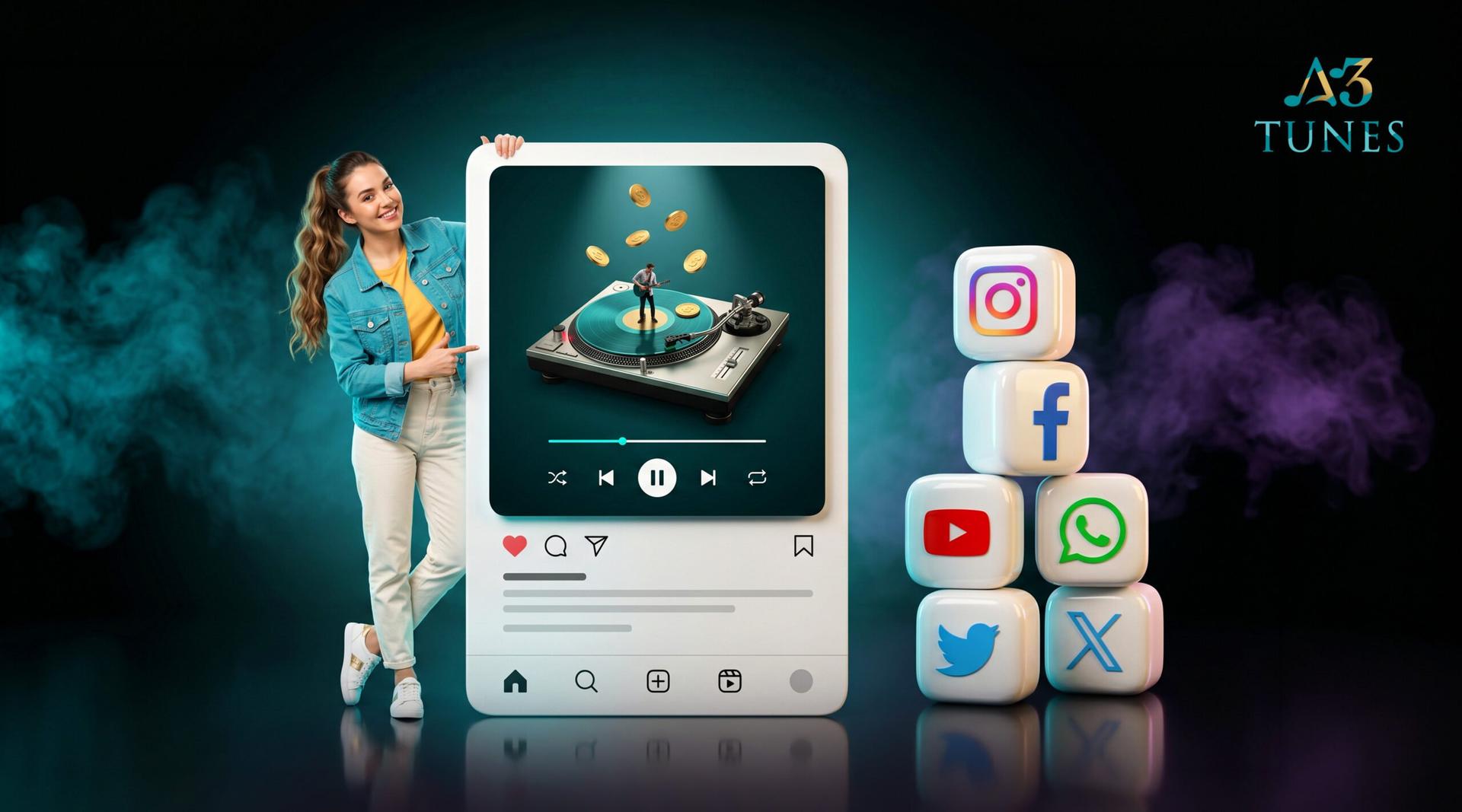
Social media can feel like a crowded stage where everyone is performing at once, and your music has only a few seconds to stop the scroll. That’s why music marketing in 2026 is less about “posting more” and more about “posting with a system.” Your goal isn’t a random viral moment that disappears by next week. It’s consistent discovery, steady fan growth, and repeat listening that turns casual viewers into long-term supporters. The biggest advantage you have is that your content isn’t just content—it’s music people can replay, share, remix, and build identity around. When your hook lands, the algorithm doesn’t just promote your video; it promotes your sound.
This blog gives you a practical playbook to use social media for your music without burning out. You’ll learn how to choose the right platforms, create repeatable content pillars, structure your release campaigns, and track the metrics that actually move streams and followers. You’ll also see how distribution ties into your marketing, because social attention converts best when your track is live everywhere your audience listens. A3Tunes positions itself as a DIY music distribution platform in India that helps artists release across major services and 150+ stores, starting at ₹1/day, while keeping full rights. If you want your social effort to translate into real listening, that distribution layer matters as much as your content.
Before You Post: Build the Foundation for Social Media Growth
Most artists start marketing from the wrong place: they begin with random posting instead of building a clear identity, a clear audience, and a clear conversion path. Social media is a discovery engine, but discovery alone doesn’t build a career. People need a reason to remember you, a reason to follow, and a reason to listen again after the first clip. That requires consistency in your visuals, your voice, and your “promise” to the audience—what they’ll feel when they hear you. When you define these basics first, every post becomes easier because you’re not improvising your brand daily.
The other foundation is operational. You need a workflow that can survive busy weeks, not just a burst of motivation on Sunday night. That means batching content, using a repeatable structure for videos, and setting realistic weekly targets you can sustain for months. It also means preparing distribution and links so that when attention hits, your audience can immediately find the full track on their preferred platform. A3Tunes emphasizes global distribution across major streaming platforms and a DIY upload-and-release approach, which can support this “attention-to-listening” pipeline when you’re ready to drop.
Define your fan persona so your content speaks to the right people
A fan persona isn’t a corporate exercise—it’s how you stop wasting time on content that attracts the wrong audience. If your sound is emotional indie pop, your best fans likely share different content, follow different creators, and respond to different storytelling than fans of drill or EDM. Your fan persona should include simple, useful traits: what mood they want from music, what communities they spend time in online, and what kind of visuals they gravitate toward. When you understand that, your captions, hooks, and video concepts get sharper because you’re aiming at a real person instead of “everyone.”
The practical test is this: can a stranger watch one video and immediately know what your music feels like? If your clips are disconnected—one day comedy, next day a serious acoustic performance, next day a trend with no musical relevance—you may get views without building identity. A better approach is to match your content tone to your sound consistently. Your persona becomes a filter: you post things your fan would save, share, or comment on, and you skip what doesn’t fit. This focus makes music marketing more efficient, because fewer posts can produce more meaningful followers.
Build an artist identity that’s instantly recognizable in 5 seconds
Identity is your competitive advantage in a world where everyone can post. You don’t need an exaggerated persona; you need recognizable signals: your aesthetic, your storytelling style, your lyrical themes, your performance energy, and your “signature” way of presenting music. Think of identity like packaging—when people recognize you quickly, they stop scrolling more often, and the platform learns who to show you to. That’s why repeated formats are powerful: a consistent camera angle, consistent caption style, consistent hook type, and a consistent emotional tone.
Your profile should also support identity. Your bio should say what you do, what your music sounds like, and where to listen. Your pinned posts should act like a trailer: your best hook, your strongest live moment, and your clearest “story” post that explains who you are. This matters because many viewers won’t follow after one clip—they’ll check your profile first. When your identity is clear, your profile becomes a conversion tool rather than a confusing feed. This is where distribution and branding connect: if you look professional and your music is easy to find, your audience trusts the next step.
Choose platforms based on your strengths and the content you can sustain
Platform choice should be strategic, not emotional. TikTok often excels for discovery and trend-based formats, Instagram is strong for relationship and community through Stories and DMs, and YouTube gives you compounding visibility through Shorts plus a long-form “home base.” But the best platform is the one you can be consistent on without losing your creative energy. If you hate dancing on camera, don’t build a strategy that requires it. If you love storytelling, build formats around lyrics, meaning, and mini-narratives. If you’re a performer, let performance be the center of your short-form clips.
A sustainable structure is one primary platform (where you post the most), one secondary platform (where you repurpose and nurture), and one library platform (where content compounds). This keeps your workload manageable while still giving you reach. It also helps your release campaigns, because fans might discover you on one platform and then validate you on another. The goal is not to be everywhere; it’s to build a reliable engine. When your music is distributed widely, it becomes easier to convert cross-platform discovery into streams, because your audience can find you on their preferred service.
Create content pillars so you never wonder what to post again
Content pillars are categories you rotate so you can post consistently without feeling like you’re reinventing your brand daily. For musicians, strong pillars are usually a mix of performance, process, personality, and proof. Performance shows you can deliver. Process shows craft and builds respect. Personality makes you relatable. Proof shows momentum—fan reactions, comments, playlist adds, or live show moments. When you rotate pillars, you satisfy different viewer motivations: some people want entertainment, some want inspiration, some want behind-the-scenes access, and some want reassurance that you’re worth following.
The best part is that pillars multiply your output without requiring new music every day. One song can produce many posts: a chorus performance, a lyric explanation, a studio layering clip, a “first draft vs final” reveal, and a fan comment response using the same hook. This keeps your marketing aligned with your music rather than distracting you from creating. Pillars also help you evaluate what works: you can compare performance across categories and double down on the ones that drive saves, shares, and follows. That’s how you turn content into a system, not a guessing game.
Build a conversion path from “view” to “stream” to “fan”
The biggest gap in music marketing is conversion. Many artists get views but can’t translate them into streams, followers, and repeat listening. Your conversion path should be simple and consistent: one link destination (a smart link or landing page), one pinned comment format, and one call-to-action that matches the post. If your video is a hook preview, the CTA can be “full track in bio.” If it’s a story post, the CTA can be “save this and pre-save in bio.” If it’s a live performance, the CTA can be “follow for the full version and release date.”
Conversion also depends on availability. If someone clicks and can’t find the track on their preferred platform, you lose the moment. That’s why distribution matters as part of your marketing plan. A3Tunes highlights distribution to Spotify, Apple Music, YouTube Music, Amazon Music, JioSaavn, and more, which supports the idea that when social attention arrives, listeners can immediately follow through on the platform they already use. A clean conversion path turns social media from “exposure” into growth you can measure.
TikTok for Music Marketing: Turning Hooks into Momentum
TikTok rewards content that earns replays, shares, and comments, and music has a built-in advantage because it naturally loops. Your job is to design clips that make looping feel satisfying rather than repetitive. That usually means delivering the best part early, using on-screen captions so the story is clear even without sound, and creating a format that makes viewers want to watch again. For example, you can reveal the hook, then reveal the lyric meaning, then reveal the beat switch—all inside a short clip that rewards attention. When viewers replay, TikTok interprets it as quality, and distribution increases.
A reliable TikTok strategy is to treat your song like a “template” other people can use. If your hook fits a POV, a transition, a montage, or a meme structure, build that structure into your own posts first. You’re not only promoting the track; you’re teaching the platform how your sound can be used. The more your sound becomes reusable, the more your audience becomes your marketing team. This approach is slower than chasing every trend, but it’s more durable because it builds repeatable momentum across multiple posts and multiple weeks.
Instagram Reels and Stories: Discovery Plus Relationship
Instagram works best when you combine Reels for reach with Stories for closeness. Reels bring strangers into your world, but Stories turn them into supporters because they see your process, your personality, and your consistency. A strong Reels plan focuses on watch time and saves. That means tight openings, early hooks, and captions that make the clip understandable instantly. You can also build “save value” by adding context: how you wrote the lyric, what inspired the song, or how you built the production. When people save, they’re signaling long-term interest, not just a quick like.
Stories are where you build loyalty. Use polls, Q&As, and “choose between two hooks” prompts to invite fans into the process. Reply to DMs with short voice notes or quick video replies when possible, because that creates emotional connection that algorithms can’t replicate. The more your fans feel involved, the more they share your content and show up on release day. Instagram becomes powerful for music marketing when it’s not just a billboard, but a community. Over time, that community becomes your most reliable launch engine, because they’ll amplify your releases without needing paid ads.
YouTube Shorts and YouTube: The Compounding Platform for Artists
YouTube is underrated for artists because it compounds. TikTok and Reels can deliver fast spikes, but YouTube can keep sending discovery for months through recommendations and search, especially when you build a consistent catalog of Shorts and a few longer videos. Shorts are your hook delivery system: quick performances, lyric highlights, “how it was made” clips, and micro-stories that make viewers curious. The trick is consistency in structure—similar framing, similar captions, and predictable payoff—so the audience recognizes you even before they follow.
Longer YouTube videos deepen trust. You don’t need expensive production; you need honesty and value. A live room performance, a studio breakdown, a lyric meaning video, or a mini-documentary about creating the track can turn casual viewers into real fans. Then connect the ecosystem: pin comments to streaming links, add the track to playlists, and use end screens to direct people to the next video. When YouTube is treated as a library, each release becomes a permanent asset that keeps working while you move on to the next song.
A Repeatable Release Campaign That Social Media Can Sustain
Most artists treat release day like a single post. A better approach is a release cycle you can reuse: tease, launch, proof, and sustain. In the tease phase, you post hooks, stories, and open loops that build curiosity. In launch week, you post direct “out now” content but also keep it entertaining—live performance clips, visual moments, or a storytelling reel that makes the song feel personal. In the proof phase, you show traction: fan comments, UGC, playlists, and behind-the-scenes moments that reinforce value. In sustain, you remix the hook into new formats so the song continues to find new audiences.
The key to making this sustainable is batching. Film multiple versions of the same hook in one session: performance, lyric-on-screen, studio playback, and “meaning of the line” storytelling. Then schedule them across weeks so you’re not scrambling daily. Also keep your call-to-action consistent: one link in bio, one pinned comment format, and one “next action” per post. When you combine this campaign discipline with wide distribution, your social momentum has somewhere to go. A3Tunes promotes distribution to 150+ platforms and a DIY workflow, which supports the idea that release campaigns convert best when your song is live and accessible everywhere fans listen.
Paid Promotion and Collaborations Without Wasting Budget
Paid promotion works best when it amplifies content that already performs organically. Instead of boosting random posts, identify two or three clips with strong retention and engagement, then put a small budget behind those. The goal is not “buying streams” directly; it’s buying more chances for the right people to see a piece of content that already proves it can hold attention. Use a simple funnel: first push a hook clip for reach, then retarget viewers who watched most of it with a second clip that deepens context, then present an “out now” clip to people who already engaged. This sequence feels natural and reduces wasted spend.
Collaborations can outperform ads because they tap into trust. Start with artists and creators whose audiences overlap with your genre, then give them a format that fits their style. Instead of asking them to “promote my song,” offer a creative prompt: an open verse, a duet harmony, a story format, or a montage concept built around your hook. Then repost their content, stitch it, and encourage your audience to participate. Collaboration works when it seeds UGC, because UGC multiplies distribution without ongoing budget. The most effective music marketing blends paid amplification, collaboration distribution, and consistent posting—so growth continues even when spending stops.
Analytics That Matter: Measure What Builds Fans, Not Vanity
If you want to improve quickly, measure the signals that platforms reward and that correlate with fan behavior. Likes are easy; saves, shares, replays, and follows-per-view are stronger indicators that your content is converting. Watch time and completion rate matter because they predict how far the algorithm will distribute your next post. Build a weekly habit: review your top-performing and lowest-performing posts, then identify one specific reason why. Was the hook too late? Were captions unclear? Did the visual fail to create curiosity? Did the clip lack payoff? When you diagnose one variable at a time, your improvement compounds.
Also track conversion behavior. Are people clicking your link in bio after certain types of posts? Are they commenting “song name?” Are they saving your lyric breakdowns more than your performance clips? Those patterns tell you what your audience values and what content bridges the gap between social and streaming. Analytics should guide your creative focus, not punish you. The goal is to learn what makes your audience care enough to return. When your distribution and royalties tracking are organized, you can also connect social spikes to listening spikes. A3Tunes emphasizes tracking and artist support as part of its distribution positioning, which aligns with using data to refine your marketing loop over time.
Why Choose A3Tunes to Support Your Music Marketing
Social media can create discovery, but distribution is what turns discovery into sustainable listening and earnings. A3Tunes positions itself as a DIY music distribution platform built for independent artists and labels, offering releases across major streaming platforms and 150+ stores, with pricing highlighted as ₹1/day for an entry plan. For a music marketing strategy, this matters because every social post should have a reliable next step: the track is live, searchable, and easy to find wherever the fan prefers to listen. When your distribution footprint is wide, you reduce drop-off and improve conversion because your audience doesn’t have to “work” to support you.
A3Tunes also emphasizes keeping full rights and making distribution accessible, which is especially valuable for emerging artists who want control while building their audience. When you combine that distribution layer with a structured social strategy—content pillars, release cycles, and analytics—you create a repeatable growth engine instead of relying on one lucky moment. The motivational truth is simple: your music deserves professional availability, and your fans deserve a clean path from “I like this clip” to “I’m listening on my platform.” When those pieces connect, your marketing becomes more predictable and your career becomes easier to scale.
Conclusion
Music marketing on social media works best when you treat it like a system, not a mood. Build a clear identity that a stranger can recognize instantly, choose platforms you can sustain, rotate content pillars so posting stays simple, and run a repeatable release campaign that keeps each song alive for weeks rather than days. Focus your creative energy on formats that earn replays, saves, and shares, because those signals tell the algorithm your content is worth recommending. Then support that attention with a clean conversion path—one link destination, consistent CTAs, and availability across streaming platforms—so discovery becomes real listening and real fans.
The artists who grow steadily are not always the most “viral.” They’re the most consistent at turning attention into community. When you post regularly, reply to fans, collaborate strategically, and measure what actually converts, your audience compounds across releases. And when your music is distributed widely and professionally, your social momentum doesn’t leak away—it lands where it can pay you back in streams, followers, and long-term loyalty. A3Tunes highlights distribution across major platforms and 150+ stores while keeping artist rights, which supports a marketing approach built on accessibility and control. If you follow the playbook above, social media stops feeling like chaos and starts behaving like a growth engine you can run every time you release.